[Editor’s Note: Our Indomitable Sportsman Jay Flemma takes us back to northwest England’s Royal Liverpool Golf Club, this time for a walk though over 150 years of golf history. Click here for last month’s breakdown of the golf course and its design.]
HOYLAKE, MERSEYSIDE, ENGLAND – 156 years ago, across the scrubby, sandy, windswept dunescape that ultimately ascended to the rarified air of an Open Championship venue, it was not the tang of the salty air and the coo of the seagulls that greeted athletes and patrons, but the thundering gallop of hooves and the humble aroma of stables.
Before golfers hoisted Claret Jugs there, much of the grounds of Royal Liverpool Golf Club was the horse racing oval of the Liverpool Hunt Club.
But golf’s meteoric rise throughout the UK and elsewhere during the latter half of the 19th century ultimately gave birth to not only Royal Liverpool, but eight wondrous seaside links throughout England’s northwest coast. Three of those bear the “Royal” designation – Lytham and St. Annes, Birkdale, and Liverpool – and combined have hosted 39 Open Championships among them. Five more – West Lancashire, Formby, Wallasey, Southport and Ainsdale, and Hillside – may not bear the name “Royal” and may not have hosted the Open, but they are as revered and cherished every bit as much as their Royal cousins. And, collectively, throughout the more than century and a half since their founding, they have hosted the entire galaxy of major international, national, and local golf championships.
Royal Liverpool, or more colloquially “Hoylake,” – the name of the town 10 miles from Liverpool City Center where the links is located – has been a gold standard host for all manner of championships since its genesis, both professional and amateur. Set on the shores of the Dee and with the Welsh hills in the distance, the club is never far from its illustrious and ever-growing history. As a reminder of its previous life, the original saddling bell is displayed among the memorabilia in the clubhouse, and countless relics from the formative years of the game grace their innumerable trophy cases. But it’s their stewardship of golf values that is every bit as estimable and inspirational as their golf course is sublime.
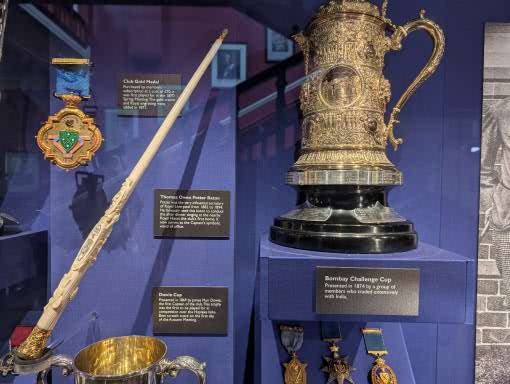
THE GENESIS OF ROYAL LIVERPOOL GOLF CLUB
According to the club’s historical records:
“In 1869, a Special Meeting was called by James Muir Dowie at the Royal Hotel in Hoylake, to propose the formation of a new Golf Club. Twenty-one gentlemen arrived and, after discussion, agreed to the idea and appointed Dowie as the first Captain.
Robert Chambers, son-in-law of Dowie, and George Morris, brother arof Old Tom, were commissioned to lay out the original 9-hole course in 1869, which was extended to 18-holes two years later. 1871 was also the year in which the Club was granted its Royal designation, thanks to the patronage of HRH Prince Arthur, the Duke of Connaught.
For the first seven years of its life, the links land still performed its original function, doubling as a golf course and a horse racing track – indeed, echoes of this heritage can be found today in the names of the first and eighteenth holes, Course and Stand, while the original saddling bell still hangs in the clubhouse. Once the horses had been dispatched to pastures new Hoylake began to take its place in the history of golf in general and of the amateur game in particular.
In 1885 the links hosted the first Amateur Championship; in 1902 the first international match between England and Scotland, later to become the Home Internationals; and, in 1921, the first international match between Great Britain and the United States of America, which would turn out to be the prototype Walker Cup.”
Indeed, Royal Liverpool enjoys a long, rich reputation as both a “Club of Firsts,” and a that of a club endlessly expanding its broad and deep list of historic tournaments. An instant and forever classic, Royal Liverpool’s importance to the game of golf cannot be overstated.
THE OPEN CHAMPIONSHIPS
Royal Liverpool has hosted the Open 13 times, more than any other club in England except St. George’s. Many of the winners there have been golf immortals, though – sadly – some of those names now echo through the centuries more faintly than their hallowed legacies deserve. But they are seminal, indeed foundational to the history of our game, and they should be studied and celebrated as equally as Nicklaus, Hogan, Woods, and McIlroy.
Hoylake reveres the amateur game every bit as fervently as the professional ranks, and on six occasions three different amateurs have prevailed at the Open: John Ball, Harold Hilton, and Bobby Jones. And it was these three defining moments that vaulted Royal Liverpool’s reputation from ordinary club to one of the game’s most holy grounds.
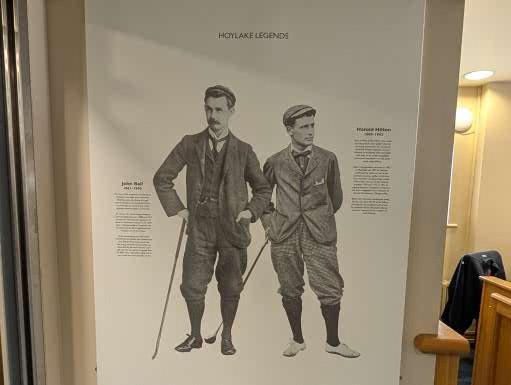
1890 – JOHN BALL, JNR. (AMATEUR)
The first of the three amateurs to win the Open, Hoylake born and bred Ball was the son of the owner of the Royal Hotel which stood close to what is now the 17th green. “Johnny Ball” as he was called took up the game at an early age and with the course literally on his doorstep, became a child prodigy. He would chip golf balls from his front door of the hotel to the new clubhouse as he made his way to his tee time.
In 1878, aged just 16, he finished fifth in the Open at Prestwick. A decade later he won the first of his eight Amateur Championship titles and, in 1890, triumphed in both the Open and the Amateur in the same year. Regarded by locals as perhaps the finest amateur golfer England has ever produced, between 1888 and 1912 Ball won an incredible eight British Amateur Championships as well as his lone Open. Ball’s career was remarkably long – with his first Amateur victory at 26, and his last when he was 51.
Ball was the club’s first homespun hero and is still regarded as their favorite homegrown son. Universally loved by beggar and king and equal in his kindness and treatment to all, Ball’s legacy is the perfect example of the benefits of living a life dedicated to the virtues golf teaches.
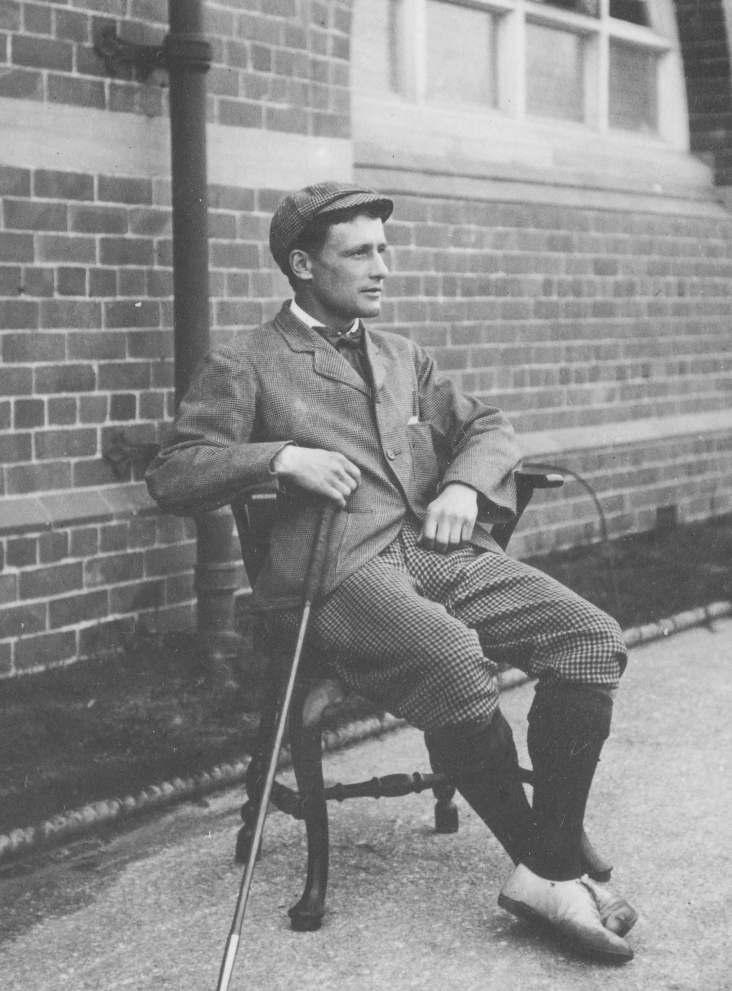
1897 – HAROLD HILTON (AMATEUR)
Harold Horsfall Hilton was born in West Kirby in 1869, the year of the Royal Liverpool’s founding. In a stellar career he won two Open Championships, (Muirfield (1892) and Hoylake (1897)), and won the Amateur four times. He also won the 1911 U.S. Amateur at Apawamis Club in Rye, New York.
“Like Ball, Hilton must have walked to the club each day. He was very popular then, although he lived slightly under the shadow of the other local hero, John Ball,” explained Joe Pinnington, unofficial, but de facto Royal Liverpool club historian for Hoylake, who recalls decades of history with memory bank precision.
“Ball was a very British type hero, quiet, reserved and humble, whereas Hilton had a zest for living, a more flamboyant regaling of people with both his golf and his stories. After he won at Apawamis, he was welcomed home as a hero in London, but the magnitude of winning the U.S. Open was not as prestigious at the time as it is now.”
1913 – J.H. TAYLOR
Around the turn of the century John Henry “J.H.” Taylor formed the ‘Great Triumvirate’ with Harry Vardon and James Braid. Another young prodigy, he learned the game at the Royal North Devon Links in Westward Ho and became a golf professional at age 18.
“Taylor came from a humble beginning, and yet he grew into one of the main players in the foundation of the PGA,” Pinnington advised, noting rightfully that besides being one of the dominant players of the age, Taylor also was a pioneer of the sport. “Taylor was a doer; he loved helping other people more than himself. His grace was as great as his golf skill,” Pinnington concluded.
Five times the winner of the Open, (and a lifetime total of 19 professional events), Taylor’s his first triumph, St. George’s in 1894, made him the first English Professional to win the Open. That also was the first time the Open was contested outside Scotland, a seminal moment for the event and a source of great joy and pride for the English. Taylor successfully defended his title the following year at the Old Course at St. Andrew’s. His “three-peat” – as we Americans call winning three in a row – was denied the following year by Harry Vardon, who need a playoff to finally shake free of Taylor.
Taylor was a small man – possibly built more like a grocer than a golfer – with what the club history describes as, “a flat, low swing which was ideal for punching the ball through the wind.” During his remarkable run of five Open Championship victories, he won each by no less than four strokes. His last victory, Hoylake in 1913, was perhaps his finest, as it rained bricks and bats all week. Still, Taylor thrived in the atrocious conditions, besting defending champion Ted Ray by a convincing eight shots.
“His resolution was remarkable – it was filthy weather,” Pinnington observed crisply. “Bernard Darwin followed him in 1913, and wrote a wonderfully poetic passage about how Taylor, ‘hit a mashie into the wind at number six and it seemed to bore a hole into the wind, hovered above the flag, and then dropped within twelve inches of the hole.”
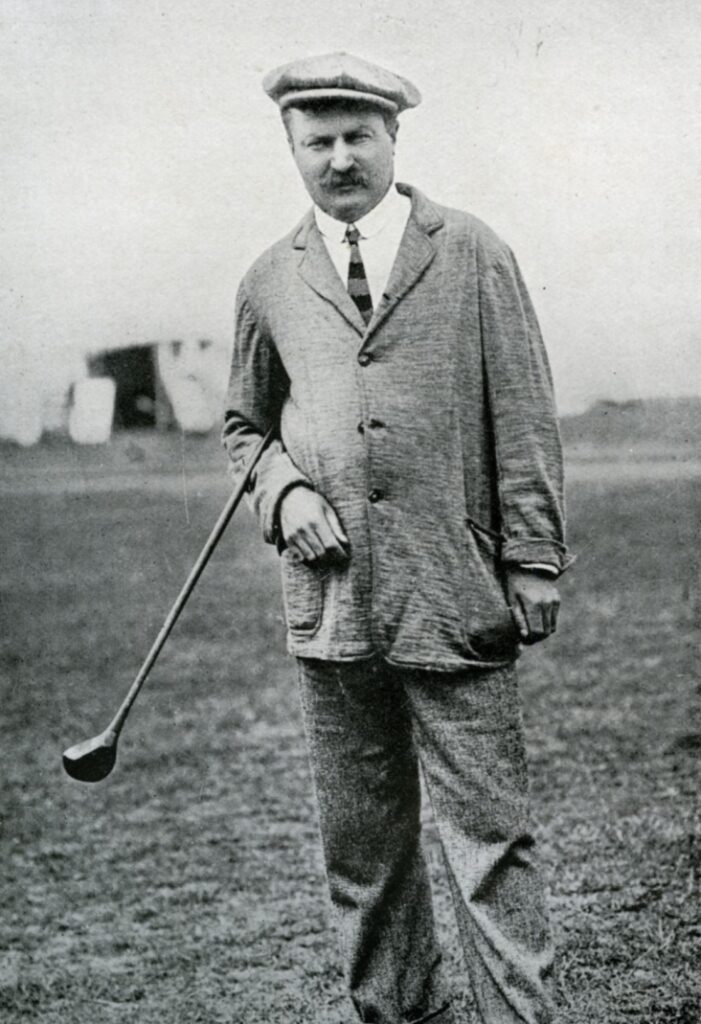
1902 – ARNAUD MASSEY
Holding off J.H. Taylor to won by two strokes, Arnaud Massey was the first great French golfer and remains, over 100 years after his 1907 victory, the only Frenchman to win a major. He was the first person not from Great Britain and Northern Ireland to win the Open and the only winner from continental Europe before Seve Ballesteros triumphed at Royal Lytham in 1979.
According to the club historical records, Massey, who hailed from the resort town of Biarritz, France, learned golf by watching British professionals enjoying off-season sunshine.
Massey’s Open win at Royal Liverpool meant so much he named his daughter – born just days before his triumph – ‘Hoylake.’
1924 – WALTER HAGEN
H.S. Colt once reached the semi-final of the Amateur Championship, but it was as a course architect that he left his indelible mark on the game. He participated in the design or redesign of over 300 golf courses (115 original) across six continents. Among his gems are Wentworth, Sunningdale (New), Muirfield and Royal Portrush, while across the Atlantic, he collaborated with George Crump and others to create Pine Valley.
Colt’s extensive 1924 redesign of the Royal Liverpool ranks among his most famous achievements. That year, the flamboyant, some say arrogant, Walter Hagen, an immortal of American golf and winner of 10 majors, qualified for the Open at Formby then went on to win at Hoylake. Needing a four on the last, Hagen left himself with a perilous five-footer which he nervelessly holed for victory.
The club history notes that after winning, Hagen’s wife Edna not only ran across the final green in spiked heels, she was carried into the clubhouse by her husband becoming the first woman to enter it. As the club history states, “It all fitted the Hagen image of rebellious, hard-drinking, poker-loving trendsetter. He dragged golf into the commercial age and once declared: ‘I don’t want to be a millionaire, I just want to live like one.’”
Oh, he certainly did. But that Hoylake story pales in significance to this Shakespearean-in-magnitude drama. Remember how when Young Tom Morris won three Opens in a row and got to keep the Moroccan Belt? Well between 1924-1928 Hagen won four PGA Championships and possession – for one year only each time – of the Wanamaker Trophy. When he lost to Leo Diegel in 1929 and was asked to give back the trophy, Hagen stated that he lost it in a cab in St. Louis. Diegel went home empty-handed that week, and the PGA had to make a new Wanamaker the following year.
Decades later, according to seminal golf writer Dan Jenkins, at some time in the mid-1970s workmen in Detroit, Michigan were demolishing a building they found a trunk in the basement that contained the old Wanamaker Trophy. Who’s building was it? The Walter Hagen Golf Club Manufacturing Company. See Jenkins’s novel Slim and None for more on that story.
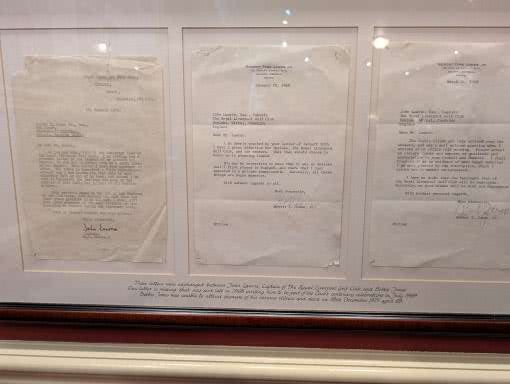
1930 ROBERT TYRE JONES, JNR. (AMATEUR)
“No history of Hoylake would be complete without mention of the legendary Bobby Jones, who can be thought of as Hoylake’s adopted son,” writes the club history. “In 1930 the Club hosted his winning of the Open Championship, a victory that would become the second leg of his remarkable Grand Slam – the winning in the same year of the Amateur and Open Championships of both Great Britain and the United States.”
Jones’s triumph at Hoylake was his third Open Championship; he won back- to-back Claret Jugs in 1926 and ’27, at Royal Lytham and St. Andrews respectively. Next year is the 100th anniversary of his win at Royal Lytham, and that club was awarded the Amateur partly in recognition of the centenary.
No golfer, not even Jack Nicklaus or Tiger Woods, has had the international impact on the game as Jones has. But the seeds for Jones’s triumphs were planted years earlier, at a 1921 precursor to what would become the Walker Cup.
“We were just becoming aware of what a menace America was becoming on the golf course,” Pinnington quipped. “We got hammered in that 1921 precursor by Jones and the rest of the American team. It was a last minute event scheduled by the R&A and Hoylake. All the American amateur greats came over – Jones, Ouimet – all of them.”
Led by Jones and many other seminal names of the age, the Americans went on to dismember their English counterparts. Nine years later, Bobby Jones would retire upon completing the Grand Slam at fabled Merion Golf Club (East) with an 8&7 defenestration of runner-up Eugene Homans.
Jones went out on top, forever a winner. And then for a second act we got Augusta National.
[Editor’s Note: We will continue our march through Hoylake’s illustrious professional and amateur history when Jay’s column continues in the next issue of Golf Course Trades.]
When not reporting live from major sports championships or researching golf courses for design, value, and excitement, multiple award-winning sportswriter Jay Flemma is an entertainment, Internet, trademark, and banking lawyer from New York. His clients have been nominated for Grammy and Emmy awards, won a Sundance Film Festival Best Director award, performed on stage and screen, and designed pop art for museums and collectors. Twitter @JayGolfUSA