This column features recollections of the author’s 38 years as a golf writer. These installments stem from his many travels and experiences, which led to a gradual understanding that the game has many intriguing components, especially its people.
Since becoming a golf writer (https://golfcoursetrades.com/making-the-rounds-part-1/) I’ve had a lot of respect for golf course photographers. Maybe it was from schlepping a 3-pound Canon A1 camera – along with several lenses, golf clubs and a notepad – while making many rounds. Or maybe it’s because their job is dangerous as this possibly Zen-like experience involves golfers firing live bullets at you. On several occasions I was almost decapitated by errant line drives from people not bothering to yell “Fore!”
And golf photography can be costly. I found this out the hard way after driving a cart across a stupid little bridge at the thankfully long-defunct Clover Valley GC outside Port Orchard, Wash. Thinking my camera was safely secured in a cubby hole, I hit a bump and watched in horror as it popped out and into a rotten little creek, costing me $280 (in 1988 dollars) to repair.
I took more than 3,000 photos over eight years compiling three editions of “Golf Courses of the Pacific Northwest,” the last of which is 620 pages long and contains over 60 of my images, including a 16-page, 4-color section with 30 of the best. By “best” I mean photos luckily taken in the proper light, focus, setting and artistry. These were different than the thousands of others of seemingly anonymous fairways and greens (though on each photo I dutifully documented the course name along with the hole number, par, and yardage).
Because of my experience knowing how hard a golf course photographer must work to get multiple versions of THE shot, I added a Golf Photography tab on the home page of Cybergolf.com in 2000 to focus on their work. By far the section’s most prolific contributor – editorially and pictorially – was Aidan Bradley, a native of Cork, Ireland, who moved to Santa Barbara, Calif., and launched his career as a commercial studio photographer (see more below). We had many chats over the years, some involving a shared friend, Rob Perry.
I’ve known Rob for several decades. He was an original member of the Northwest Golf Media Association that I co-founded with Bob Spiwak in 1995. Rob also subscribed to my various golf project-tracking reports (https://golfcoursetrades.com/making-the-rounds-part-1/ and https://golfcoursetrades.com/big-hat-no-cattle-golf-developers/) which provided contact information for developers and their new courses.
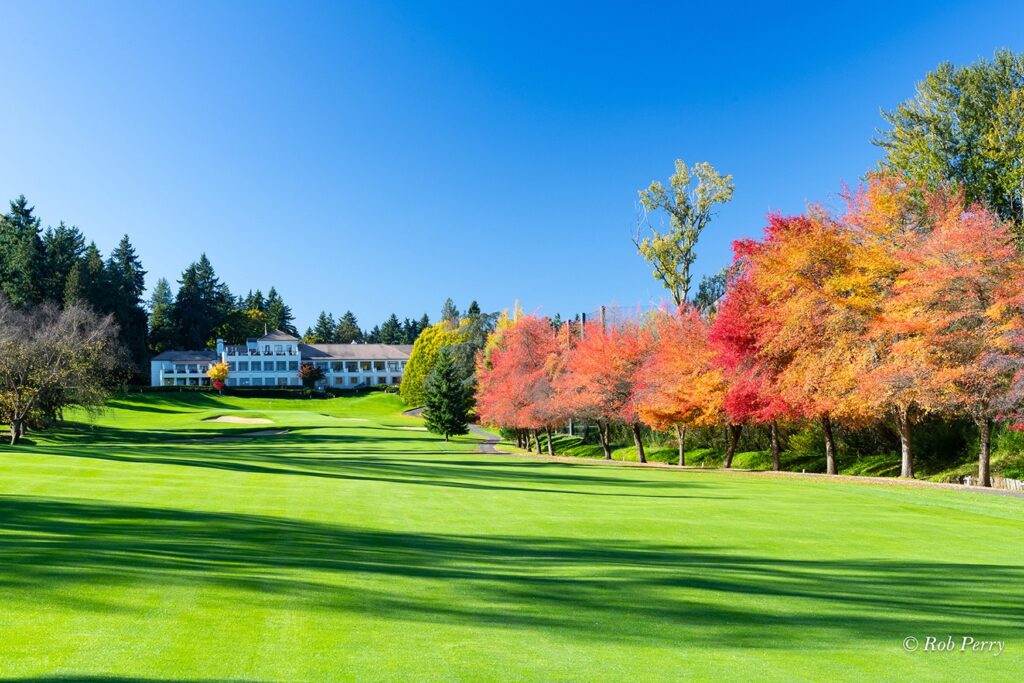
During golf rounds with Rob, I’ve enjoyed his effortless swing, easy conversations and calm demeanor, the latter a good trait for any photographer. He’s also been my first choice for images whenever I do an article or centennial book for a private Northwest club. As a 33-year member, Rob was a no-brainer when me and Anni – my wife and the designer of these books – published the one for Broadmoor Golf Club, which celebrated its milestone in 2024.
I’ve always wanted to do a Q&A with him. Here’s my chat with Rob Perry along with a few of his superb images.
Jeff Shelley: Please discuss your youth: birthplace, parents, family, etc. Feel free to describe your early interests: athletics, school, etc., and any other personal details you’re willing to reveal. Did you always enjoy golf, or did it take time to embrace it?
Rob Perry: “I was born in Seattle and raised in Bellevue, Wash. I am the youngest of three kids with an older sister and brother. Our home was only half a mile from Bellevue Municipal Golf Course where I learned to play after taking golf lessons from the pro. My Mom introduced me to the game as she occasionally played with a group of ladies. She was also part of group that fundraised for Children’s Hospital in Seattle. Part of that was a yearly Hole-in-One contest at Bellevue Municipal GC where I would help measure the KP’s.
“Growing up so close to the golf course I would spend hours looking for lost balls with friends, clean and sell them on the third tee to pay for my green fees. I was fortunate enough to have three close friends in grade school who also golfed. We would celebrate each other’s birthdays at various courses on the Eastside [the other side of Lake Washington from Seattle] including a par 3 course in Redmond called Little Augusta. This hidden gem was owned by a Japanese family that took care of it like it was a Japanese garden. It was so well maintained and landscaped it felt, at the time, you were at Augusta National.
“Over my grade school years, I managed to get two holes-in-one. The reward from the course was a sleeve of balls and a hot dog. What else could a young golfer want back in the day? Unfortunately, they sold the property to a developer, and the site is now apartments. Also in grade school, I caddied at Broadmoor Golf Club in Seattle on summer weekends. I got up very early, walked a mile to a bus stop, rode over to Seattle and then walked another mile to the course before arriving at the caddy shack by 7 a.m. If given a loop, I would get paid $15, then return to the bus stop and head home. A long day with a lot of walking for what seems like not much money today but was well worth it for a kid back then.
“After grade school I traveled across Lake Washington and attended Seattle Prep High School where I played on the golf team and ran track. I had a great time on the golf team and enjoyed the competition even when we went up against our rival O’Dea High School, which happened to have a guy named Fred Couples on their team. As you can imagine, he was far and away more talented than any high school golfer in the state. If you’re going to get beat badly, it’s a little more comforting to know now it was by a future World Golf Hall of Famer.”
JS: What colleges did you attend, and what were they like for you? What were some of your early jobs and what did they entail?
RP: “After three years at Seattle Prep, I enrolled at Seattle University in a new program called ’Matteo Ricci.’ It was a condensed version of three years of high school and three years of college, and you graduated with a degree in Humanities. I also studied Business Administration and graduated a year after that with a degree. I did not play golf in college because Seattle U had dropped the sport before I attended.
“Throughout my high school and college years I worked summers and holidays at the family wholesale food distributorship called Perry Brothers. Most of my work was in the warehouse receiving goods, stocking, unloading trucks and filling orders for deliveries. It taught me a lot about being organized, responsible and the need for a good work ethic.
“I continued working for the family business after college for five more years until they sold the company to Kraft Foods. I worked at Kraft for a couple years then began working for a friend in the sports-apparel business in shipping and receiving along with photographing their line of clothing and accessories. He was the one who suggested I check into Brooks Institute of Photography in Santa Barbara, Calif., a world-renowned school that attracted students from all over.
“I applied for the three-year program and was accepted (two college degrees in hand really helped). I knew that in my late-20s I wanted to combine my two loves – photography and golf – and create a job once I graduated. So, with that idea in mind, I incorporated golf into every assignment possible (product, portraiture, fashion or audio-visual). My teachers thought I was crazy, but in the end appreciated my passion for the game and commitment to this career path.
“During my time in Santa Barbara, I started building a portfolio photographing golf courses in the area as a student. I was fortunate to photograph for Hunter Resources, which owned nearby courses like Sandpiper in Goleta, La Purisima in Lompoc, and Hunter Ranch in Paso Robles. Another early club that allowed me to photograph their course was Sherwood CC in Thousand Oaks. This very exclusive private club, designed by Jack Nicklaus, hosted the Shark Shootout for many years as well as Tiger Wood’s tournament. Ten years after starting my career, they hired me to come back and photograph the course, which was a nice full-circle moment.”
JS: Please explain how or if any of these job experiences led you to ultimately consider photography as an occupation.
RP: “None of these job experiences led me to a career in golf course photography other than my love for the game, which eventually narrowed my focus to what I wanted to photograph when I graduated from photography school.”
JS: Once you decided to pursue a career in photography, was golf your primary focus or were there other areas of early interest?
RP: “Golf was always the main focus of my work. But I also photographed products, architecture and real estate on the side.”
JS: After deciding to pursue work as a golf photographer, who were your mentors, how were they supportive and what did you learn from them? Please describe some special challenges and hurdles while striking out on your own.
RP: “While attending Brooks Institute of Photography I did an internship with Aidan Bradley, who was an alumnus of the school and had a photo studio in town. He was just starting to add golf course photography to his line of work when I began assisting him. I researched and contacted many golf architects and golf-management companies inquiring about work. We managed to get a couple jobs in Palm Springs but spent a lot of time playing golf courses and studying their architecture and how to use light correctly to showcase the design. That was very beneficial in my early development as a golf course photographer.
“When I started out on my own, I had a portfolio of work from my time in California that helped me produce marketing materials to mail or hand out. I spent a lot of time contacting golf courses, golf management companies, architects, golf publications and golf associations introducing myself and my work to them. I also traveled a lot, visiting courses in the hopes of photographing them on a freelance basis and showing staff my work.
“These efforts helped me get a few big breaks. I was contracted by the USGA and, for several years, to photograph courses where they were going to hold championships the following year. I worked for Scott Oki (Oki Developments) who retired from Microsoft and started buying and building golf courses in the Seattle area. I was hired to photograph their portfolio of courses, including ones they were building, which helped me gain exposure. I also worked with OB Sports, a golf management company originally founded [by Kent, Wash. native Orrin Vincent] in the Puget Sound area. It also was building courses and managing others throughout the West. (The company eventually relocated to Scottsdale, where they were later acquired by Troon Golf LLC.) One of the biggest challenges for me is that the golf industry is a steady revolving door of job changes for head pros, general managers and executives. This makes it difficult to keep track of your contacts. Maintaining those connections and building new ones is a job in itself!”
JS: Describe any special challenges you encounter while shooting golf courses (wildlife, people, weather, course conditions, etc.). How many states/countries have you visited for your golf photography?
RP: “There are challenges with every golf shoot, whether it is the backgrounds, weather, course conditions, working around players/greens staff or coordinating with the golf course staff. Since Mother Nature dictates the schedule, you need patience and the ability to adapt to be successful. I have photographed golf courses in 15 states and six countries.”
JS: What kind of cooperation from superintendents is helpful while on a photo shoot? How do you coordinate with them before and during site visits?
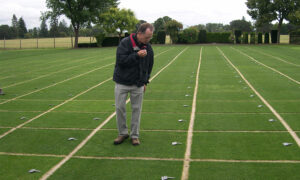
RP: “Working with golf course superintendents is crucial for a successful shoot. You are photographing their ‘baby,’ so we both want it to look its best. I can retouch the images in Photoshop to make them better, but the more a superintendent can prepare the course for a photo shoot the better the results. Sometimes I meet with them after scouting the course beforehand to let them know which holes I will be focusing on. This initial scouting determines which holes are best in mornings or afternoons based on the lighting direction. From this, they can prep the ‘morning’ holes first thing so that I can photograph them at sunrise.”
JS: Besides shooting photos of golf courses for clients, what other products have your photos appeared in and for whom? Please provide a list of your current products that readers might be interested in.
RP: “My photographs have appeared in numerous golf publications, golf calendars, golf books, scorecards, yardage books and on golf head covers, water bottles, etc. Currently I have six images (including the cover) in the ‘2026 Best of Golf Calendar’ published by Silver Creek Press.”
JS: Please describe your golf accomplishments and when/where they happened. What’s your current handicap?
RP: “Golf accomplishments include a low round of 68 at Gamble Sands, three rounds in the 60s, and a hole-in-one at Trophy Lake Golf and Casting Club in Port Orchard, Wash. I was a member at Broadmoor Golf Club in Seattle for 33 years. My current handicap is 6.6.”
JS: Please relate any funny/memorable/unusual memories from your golf course shoots and/or rounds.
RP: “Funny Happenings No. 1 – while photographing The Golf Club at Newcastle late one evening I set up the tripod on top of a sprinkler head (unbeknownst to me). I started hearing this gurgling sound and, before I could react, the sprinkler head popped out of the ground and soaked my shorts as I ran with camera in hand to a drier location. No. 2 – In La Quinta on a shoot for PGA West, I was waiting on a par-3 tee for the sunrise to light up the green on the other side of the lake when a gentleman in just his boxer shorts came out of his condo and started fishing out golf balls with his ball retriever. I patiently waited until he had his quota, even though he knew I was there and what I was doing. Frustrating but funny.
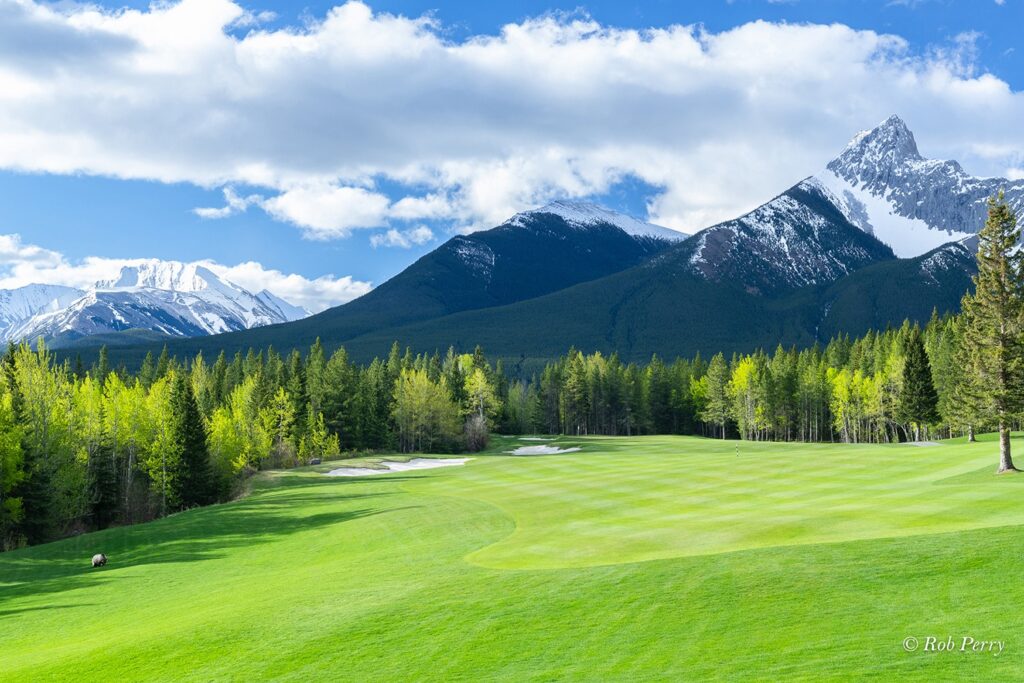
“Funny happening No. 3: I arrived for my morning shoot at a golf course in Alberta, Canada, and was notified by the staff that a grizzly bear had been spotted on the driving range. I was heading out to the third hole for first light. Though I wasn’t too worried about the report due to the distance from the practice facility, I did pack my bear spray. As the sunlight lit the hole I began photographing from the tees and worked my way to the green. When I was at the 150-yard marker, I turned around and, lo and behold, the grizzly bear was slowly eating the lush spring grass around the tees.
“I wasn’t too concerned for myself, but I knew the first group of the day would be showing up very soon. When I heard their voices and the carts arriving from the second green I knew they would be in for a big surprise. The third tee sits above and around a corner so it’s totally blind as you approach it. As the first cart rounded the corner the grizzly bear was 10 feet from the cart path. The reaction of the startled golfers was priceless! A few four-letter words were yelled as they floored the cart to a safe distance. Soon the assistant superintendent arrived – and then a conservation officer – to watch the grizzly and make sure there weren’t any interactions with the golfers. I enjoyed the show and took a few pictures of the bear on the hole with spectacular snow-capped mountains in the background. That was a bucket list moment.”
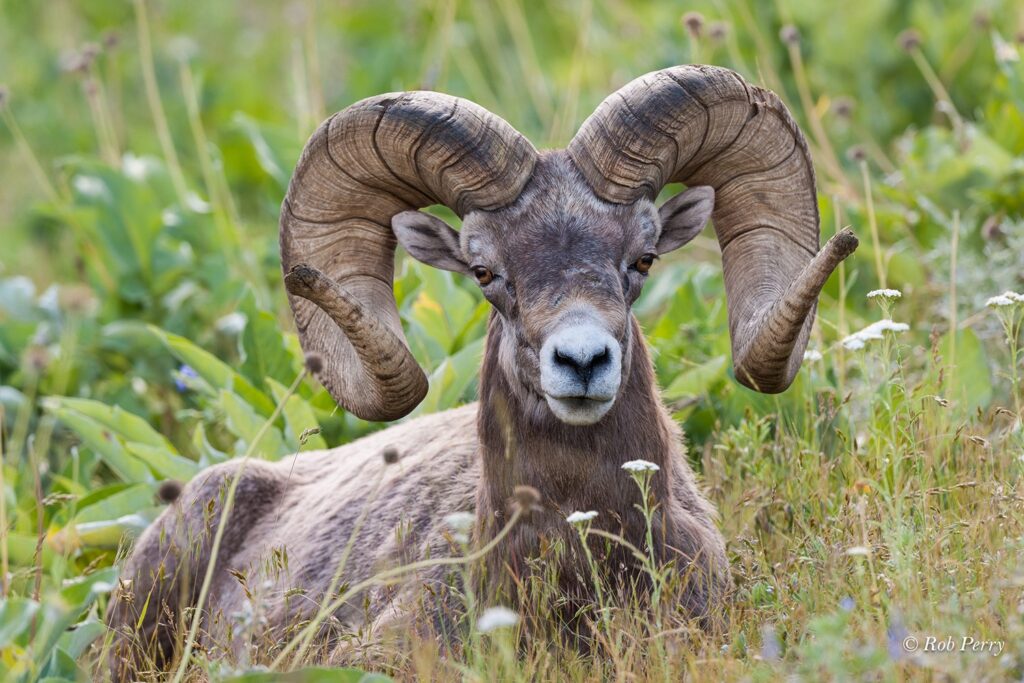
JS: Explain your reasons for moving from the Seattle area to Montana. Feel free to provide details about the sales of your Broadmoor membership and home in Bellevue and what that was like for you. Was the move worth it? If so, why?
RP: “I moved to Polson in 2020 after living my whole life in Bellevue, Wash. After the passing of my mother (Dad died many years before) and the sale of their 13 acres, I decided to move to a smaller town and get out of the hectic Seattle environment for a better quality of life. I picked Polson (population 5,600) because it offered scenic beauty, stunning mountain ranges and plenty of wildlife to photograph. It also has a fantastic 27-hole public course – Polson Bay Golf Course – on the southern shores of Flathead Lake that I enjoy playing and photographing.”
JS: List the cameras and photo-finishing equipment you used early in your career and how it has evolved over the years. What are you using now and why? Also, please predict where the technology is heading and what the future holds for amateur photographers.
RP: “I photograph golf courses with Nikon digital camera equipment. I also have a DJI Mavic 3 drone that I’m now using. I have an Epson 17-inch printer that I do some fine art printing on as well. Camera manufacturers are now making mostly mirrorless cameras. I’m slowly making that transition, but it entails all-new lenses which are the costliest part. I currently use my DSLR camera body and lenses for golf course shoots and my mirrorless body with an adapter for the lenses for wildlife photography. Camera equipment is very expensive and a huge investment, so the transition to major upgrades is slow for that reason.”
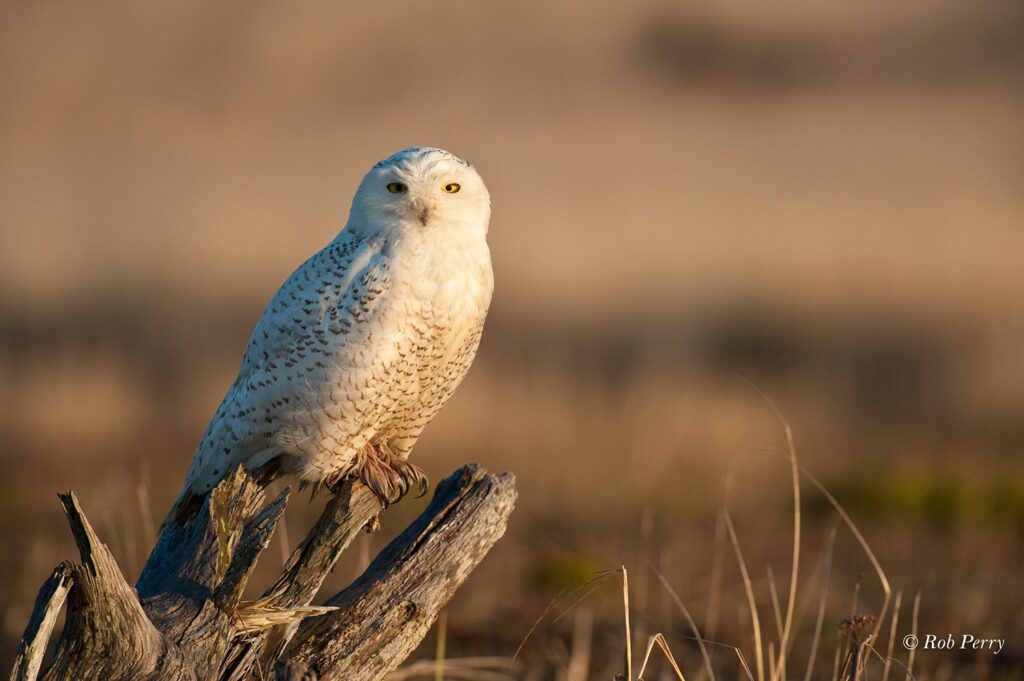
JS: Describe your heightened focus on wildlife photography, your ongoing career in golf, and current annual schedule. Has wildlife always been an interest for you? Are there any new subjects you’re pursuing (people, still life, events)? Is your career in golf photography slowing down?
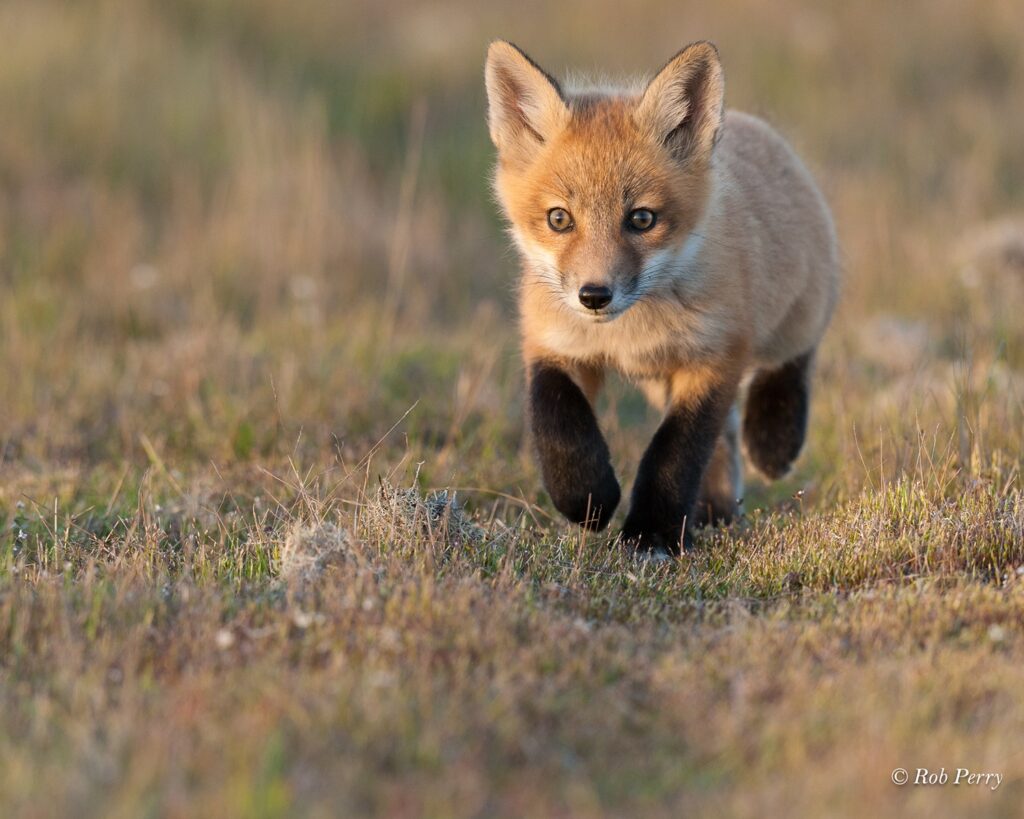
RP: “As I’m closing in on retirement age, I still have the passion to photograph golf courses near and far. There are many places I still would like to go and shoot golf courses on a freelance basis, so I have no plans to put the camera down anytime soon. Photographing wildlife is another passion. If I can combine wildlife with a golf course (like the grizzly story above) I’m super-excited. If you’re not enjoying nature and wildlife while playing golf, you’re missing a huge part of the experience and beauty of this game.
The introduction of social media and the birth of ‘influencers’ has certainly affected the business of professional golf photographers. Golf courses saw a huge surge of business during and after COVID with increased exposure from social-media influencers. This costs little to nothing and has reduced their marketing needs to pay for professional photography. I get that. But I still think high-quality images are needed for one golf course to stand out from another.”
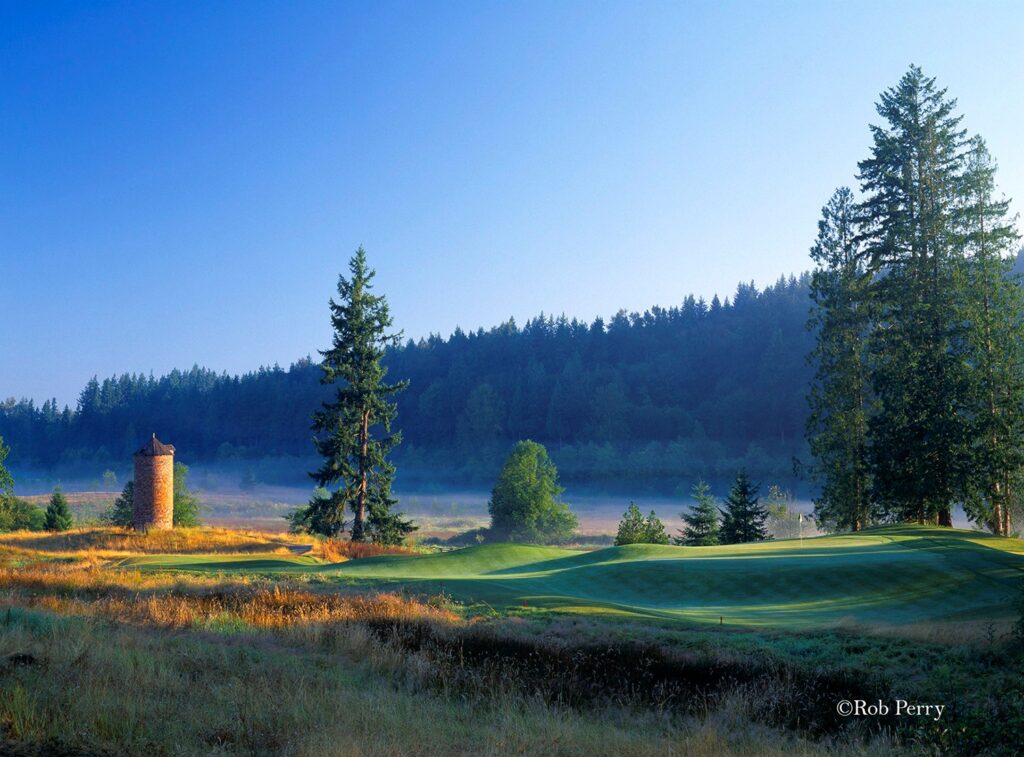
JS: What are some of your all-time favorite courses to shoot/play in the Pacific Northwest or anywhere else for that matter?
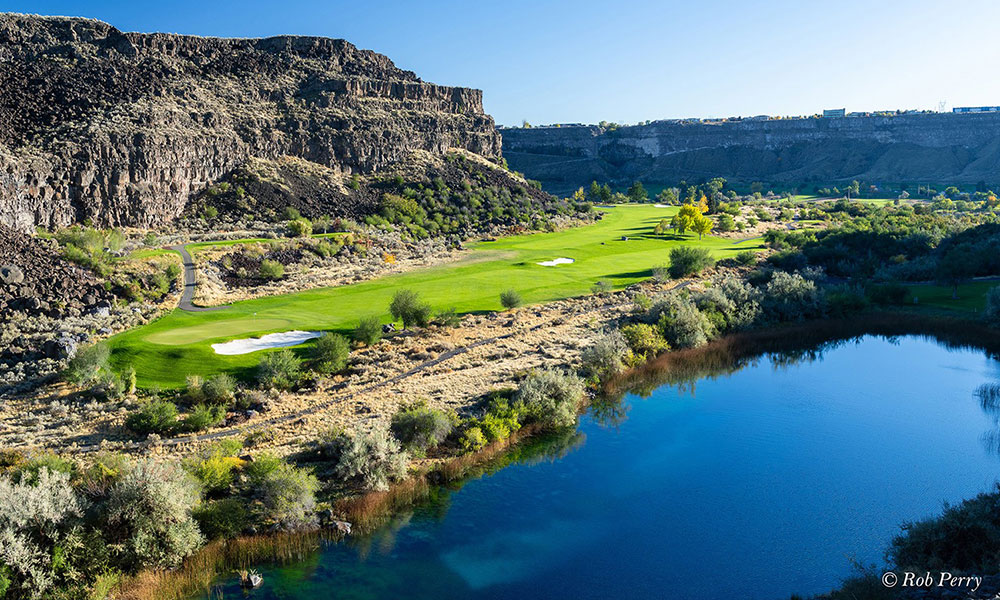
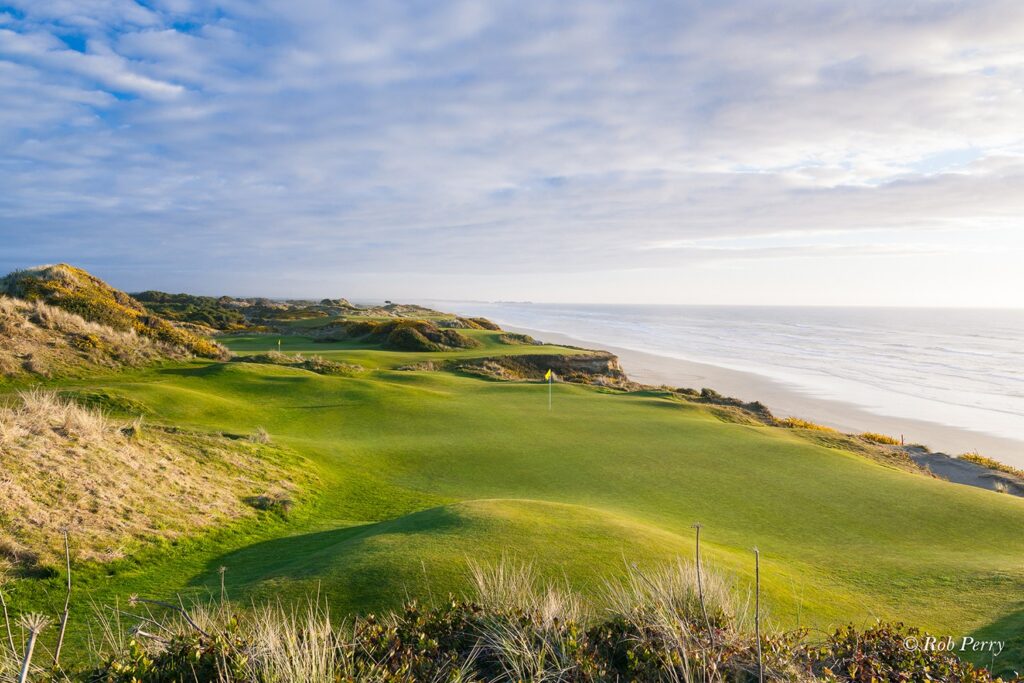
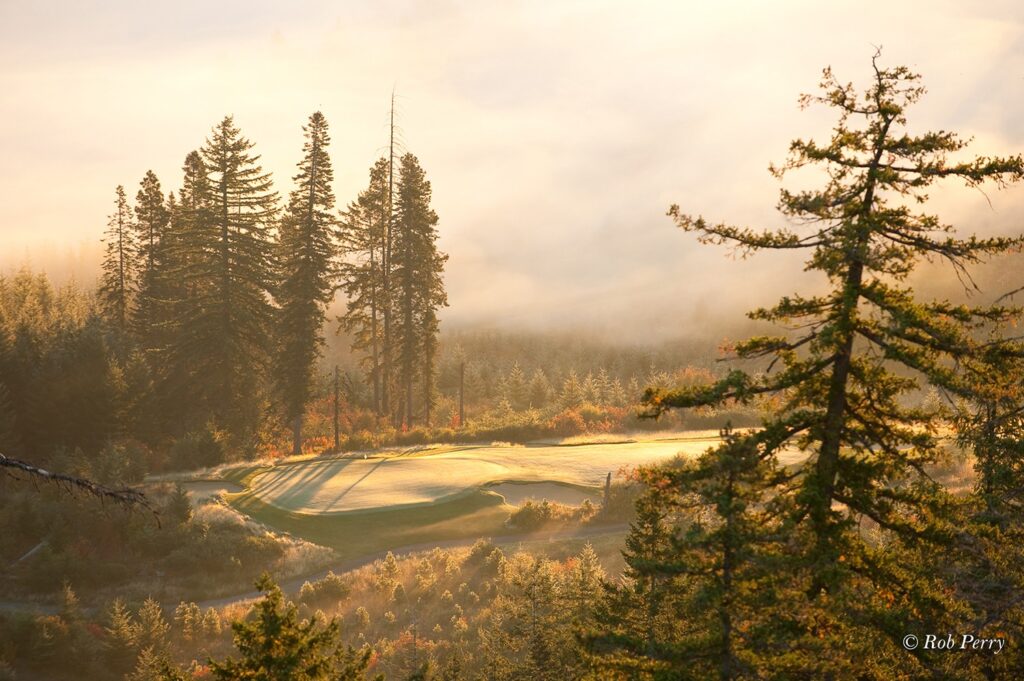
RP: “Some of my favorite courses to play in the Northwest include Broadmoor GC, Chambers Bay, Gamble Sands, Trophy Lake. Wine Valley, Aldarra, Sahalee, and Tumble Creek Club/Suncadia Resort in Washington; Circling Raven and Blue Lakes in Idaho; and Bandon Dunes Resort in Oregon, to name a few. It’s hard to name favorite courses to photograph. But I do like courses with elevation changes, clean scenic backgrounds and ones where the architectural design works well with the surrounding environment.”
All copyrighted photos in this story are courtesy of Rob Perry Photography. For more information, visit https://www.robperry.com/.
Jeff Shelley has written and published 12 books as well as numerous articles for print and online media since 1987. Among his titles are three editions of the book, “Golf Courses of the Pacific Northwest.” The Whidbey Island resident was editorial director of Cybergolf.com from 2000-15, co-foundealdr of the Northwest Golf Media Association and seven-year board president of First Green beforJeff Shelley has written and published 12 books as well as numerous articles for print and online media since 1987. Among his titles are three editions of the book, “Golf Courses of the Pacific Northwest.” The Whidbey Island resident was editorial director of Cybergolf.com from 2000-15, co-founder of the Northwest Golf Media Association and president of the nonprofit First Green (https://www.thefirstgreen.org/). To contact Jeff: fairgreens@seanet.com.e it merged with the GCSAA in 2018. Contact Jeff at fairgreens@seanet.com.